
Ammo calibers are the first thing that confuses every new shooter and the last thing most shooters ever fully understand. The numbers are inconsistent, the names are historical accidents, and two cartridges with completely different names can fire the exact same diameter bullet. This guide decodes every caliber you are likely to encounter, compares them honestly on recoil, range, energy, cost and availability, and tells you exactly which ammo calibers to buy for the job you actually have.
Ammo Calibers Explained: The Quick Answer
Caliber is the diameter of the bullet, measured in inches or millimeters. The most common ammo calibers are 9mm and .45 ACP for handguns, .223/5.56 and .308 for rifles, .22 LR for rimfire, and 12 gauge for shotguns. For most shooters, 9mm is the correct handgun choice and .223 the correct rifle choice — they are the cheapest, most available, and easiest to shoot well.
Key Takeaways
- Caliber names lie. A .38 Special fires a .357-inch bullet. A 9mm fires a .355-inch bullet. The names are marketing history, not measurements.
- 9mm is the right answer for most people. Cheapest, most available, lowest recoil, and modern defensive loads have closed the gap with bigger ammo calibers.
- .223/5.56 is the right rifle answer for most people. Cheap, low recoil, effective, and it feeds the most popular rifle platform in America.
- Bigger is not better. A caliber you can shoot accurately beats a bigger one you flinch with. Every time.
- Cost per round is the hidden variable. The caliber you can afford to practice with is the caliber you will actually be good at.
- Some ammo calibers are cross-compatible — and some only in one direction. You can fire .223 in a 5.56 chamber, but not the reverse. That distinction matters.
- Shotgun “gauge” is not caliber at all — it runs backwards, and almost nobody explains why.
What “Caliber” Actually Means
Caliber is simply the diameter of the bullet, expressed either in inches (.45 = 0.45 inches) or millimeters (9mm = 9 millimeters).
That should be the end of it. It is not, because the naming conventions are a mess inherited from a century of marketing departments.
The Numbers Lie — Here Is the Proof
| Cartridge Name | Actual Bullet Diameter | The Problem |
|---|---|---|
| 9mm Luger | .355″ | Not 9mm. It’s 9.01mm. |
| .380 ACP | .355″ | Identical diameter to 9mm. Only the case is shorter. |
| .38 Special | .357″ | Not .38. Named for the old case diameter. |
| .357 Magnum | .357″ | Identical diameter to .38 Special. Longer, hotter case. |
| .40 S&W | .400″ | Finally, an honest one. |
| 10mm Auto | .400″ | Identical diameter to .40 S&W. Longer, far more powerful. |
| .45 ACP | .451″ | Close enough. |
| .223 Remington | .224″ | Off by a thousandth. |
| .308 Winchester | .308″ | Honest. |
| .22 LR | .223″ | Same diameter as a .223 rifle bullet. Completely different cartridge. |
The lesson: never assume two ammo calibers are interchangeable because the numbers look similar. The bullet diameter is only one of five things that must match — case length, case shape, rim type, chamber pressure and overall length all have to be right too.
The golden rule: Only fire the cartridge stamped on your barrel. SAAMI’s guidance is explicit — always confirm the cartridge designation on the ammunition headstamp matches the designation marked on the firearm’s barrel. If a round requires unusual force to chamber, stop.
The Six Variables That Actually Compare Ammo Calibers
Forget the arguments. Every honest comparison of ammo calibers comes down to six numbers.
- Energy (ft-lbs) — how much work the bullet can do. More is not automatically better.
- Recoil — the tax you pay for energy. High recoil means slower follow-up shots and worse accuracy under stress.
- Effective range — where the cartridge still does its job.
- Cost per round — the variable that determines how much you will actually practice.
- Availability — a great caliber you cannot buy in a shortage is a bad caliber.
- Firearm selection — how many guns are chambered for it.
The most underrated of these is cost. A shooter who fires 2,000 rounds a year of 9mm will out-shoot a shooter who fires 200 rounds of 10mm — every single time, with any target, under any conditions. Skill beats caliber. Affordability buys skill.
Handgun Ammo Calibers Compared
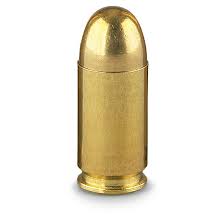
| Caliber | Typical Energy | Recoil | Cost/Round | Availability | Best For |
|---|---|---|---|---|---|
| 9mm Luger | 350–400 ft-lbs | Low | $ | ⭐⭐⭐⭐⭐ | Everything. Start here. |
| .380 ACP | 190–230 ft-lbs | Very low | $$ | ⭐⭐⭐⭐ | Deep concealment, small pistols |
| .38 Special | 250–320 ft-lbs | Low | $$ | ⭐⭐⭐⭐ | Revolvers, new shooters |
| .357 Magnum | 530–650 ft-lbs | High | $$$ | ⭐⭐⭐ | Revolver defense, deer, woods carry |
| .40 S&W | 450–500 ft-lbs | Moderate-sharp | $$ | ⭐⭐⭐ | Ex-duty guns, those who want more than 9mm |
| 10mm Auto | 650–750 ft-lbs | Heavy | $$$$ | ⭐⭐ | Woods defense, bear country, hunting |
| .45 ACP | 400–450 ft-lbs | Heavy but slow (“push”) | $$$ | ⭐⭐⭐⭐ | 1911s, big-bore traditionalists |
| .44 Magnum | 900–1,100 ft-lbs | Severe | $$$$ | ⭐⭐ | Hunting, bear defense |
Energy figures are typical for common factory loads and vary by bullet weight, barrel length and manufacturer.
9mm Luger — The Correct Default
Buy this unless you have a specific reason not to.
For decades, 9mm was dismissed as underpowered. That argument is over. Modern defensive hollow points changed the terminal performance equation so completely that the FBI, after extensive testing, moved back to 9mm — and most American police departments followed.
Advantages: cheapest centerfire handgun ammunition · lowest recoil of the serious defensive ammo calibers · highest magazine capacity · the widest firearm selection on earth · always available.
Disadvantages: honestly, very few. It is not a hunting cartridge and it is not a bear gun.
Our complete 9mm ammo guide covers loads in detail, and if you are choosing a carry load, the 9mm self-defense ammo guide covers what actually works.
.380 ACP — The Pocket Compromise
Same .355″ bullet as 9mm, shorter case, roughly 60% of the energy. It exists for one reason: it works in pistols too small to handle 9mm pressure.
Buy .380 if your priority is a genuinely pocketable gun and you accept the ballistic cost. Do not buy .380 if a compact 9mm would fit your life — 9mm is cheaper, more available, and materially more effective.
The full breakdown is in our .380 vs 9mm guide.
.38 Special and .357 Magnum — The Revolver Pair
Here is the elegant part: they fire the same .357″ bullet, and a .357 Magnum revolver will safely chamber and fire .38 Special. The .357 case is simply longer and loaded far hotter.
The practical effect is that a .357 revolver is two guns. Load .38 Special for cheap practice and gentle recoil. Load .357 Magnum for defense, woods carry or deer.
The reverse is not true. Never attempt to fire .357 Magnum in a .38 Special revolver. The gun is not built for the pressure.
See our .357 Magnum vs .38 Special guide for the full comparison.
.40 S&W — The Fading Middle
Created after the FBI wanted more than 9mm and less than 10mm. It delivered — and then modern 9mm ammunition made the entire premise obsolete.
The honest assessment: .40 S&W offers marginally more energy than 9mm at the cost of sharper, snappier recoil, higher ammunition cost and lower capacity. Agencies have been abandoning it for a decade. Buy it if you already own the gun. Do not build a new system around it.
Our 9mm vs .40 S&W guide covers exactly why the industry moved on.
10mm Auto — The Specialist
Same .400″ bullet as .40 S&W, but a longer case and dramatically more power. This is the most powerful mainstream semi-auto handgun cartridge in common use.
10mm is a woods cartridge. Hiking in bear country, hog hunting, backcountry defense against four-legged threats. It is genuinely excellent at that job.
It is a poor concealed carry choice for most people — heavy recoil, expensive ammunition, low capacity, large guns. Read our 10mm vs .45 ACP guide before you commit.
.45 ACP — The Classic
Big, slow, heavy bullet. Over a century of service. Beloved for a reason.
Advantages: large diameter even without expansion · recoil is a slow “push” rather than a sharp “snap,” which many shooters find easier to manage · superb in a 1911 · excellent suppressed (naturally subsonic).
Disadvantages: 2–3× the price of 9mm · roughly half the magazine capacity · larger guns.
Full detail in our .45 ACP guide.
Rifle Ammo Calibers Compared
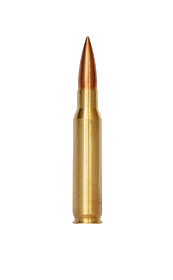
| Caliber | Typical Energy | Recoil | Effective Range | Cost/Round | Best For |
|---|---|---|---|---|---|
| .223 / 5.56 | 1,200–1,300 ft-lbs | Very low | 400–600 yds | $ | AR-15, varmint, defense, training |
| .308 Winchester | 2,600–2,800 ft-lbs | Moderate | 800–1,000 yds | $$ | Deer, elk, precision, all-purpose |
| 7.62×51 NATO | 2,500–2,700 ft-lbs | Moderate | 800+ yds | $$ | Military surplus, bulk practice |
| .270 Winchester | 2,700–2,900 ft-lbs | Moderate | 500+ yds | $$$ | Deer, antelope, flat-shooting hunting |
| 6.5 PRC | 2,700–2,900 ft-lbs | Moderate | 1,200+ yds | $$$$ | Long-range hunting and match |
| 6mm Creedmoor | 2,200–2,400 ft-lbs | Low | 1,000+ yds | $$$$ | Precision competition, PRS |
| .30-30 Winchester | 1,800–1,900 ft-lbs | Moderate | 150–200 yds | $$ | Lever guns, brush deer hunting |
| .45-70 Govt | 1,800–3,000 ft-lbs | Heavy | 150–200 yds | $$$ | Big game, bear, lever guns |
| .338 Win Mag | 4,000+ ft-lbs | Severe | 500+ yds | $$$$ | Elk, moose, brown bear |
| .338 Lapua | 4,800+ ft-lbs | Severe | 1,500+ yds | $$$$$ | Extreme long range |
.223 Remington vs 5.56 NATO — The Compatibility Rule Everyone Gets Wrong
These two ammo calibers fire the same .224″ bullet and look identical. They are not interchangeable in both directions, and getting this backwards is genuinely dangerous.
Federal Premium states it plainly: you can shoot .223 Remington ammunition in a 5.56×45mm chamber, but not the other way around, because of the pressure differences between the two standards.
| Your Chamber | .223 Rem Ammo | 5.56 NATO Ammo |
|---|---|---|
| 5.56 NATO chamber | ✅ Safe | ✅ Safe |
| .223 Remington chamber | ✅ Safe | ❌ Do not do this |
| .223 Wylde chamber | ✅ Safe | ✅ Safe |
Check your barrel stamp before you buy. Most AR-15s are 5.56 or .223 Wylde and will handle both. Many bolt-action and varmint rifles are .223 only.
.308 Winchester vs 7.62×51 NATO
A similar but less severe relationship. They share the same .308″ bullet and nearly identical external dimensions. 7.62×51 NATO is typically loaded to slightly lower pressure but often has thicker case walls.
General practice: firing 7.62×51 NATO in a .308 Winchester rifle is widely done and generally considered safe. Firing commercial .308 in a military 7.62 chamber can produce slightly higher pressures and looser headspace. Consult your rifle’s manufacturer if you are unsure. When manufacturer guidance conflicts with internet consensus, follow the manufacturer.
.308 Winchester — The Best All-Around Rifle Caliber
If you could own exactly one centerfire rifle for everything — deer, elk, precision, defense — .308 is the answer, and it is not close.
Advantages: takes any North American game · effective past 800 yards · available everywhere · huge selection of bullet types and rifles · affordable relative to its capability.
Disadvantages: real recoil (manageable, not gentle) · heavier ammunition · overkill for varmints.
6.5 PRC and 6mm Creedmoor — The Precision Class
The modern long-range ammo calibers. Long, sleek, high-ballistic-coefficient bullets that resist wind drift dramatically better than older designs.
6.5 PRC is the hunting-and-match hybrid — enough energy for elk, enough precision for 1,200 yards. 6mm Creedmoor is the competition specialist — softer recoil, exceptional accuracy, less terminal energy.
Be honest with yourself: these are expensive, and the ballistic advantage does not appear until past 600 yards. If you shoot at 200, .308 will serve you better for a third of the price.
Rimfire Ammo Calibers
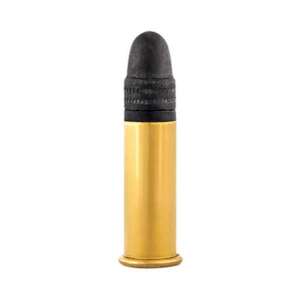
| Caliber | Typical Energy | Recoil | Effective Range | Cost/Round | Best For |
|---|---|---|---|---|---|
| .22 LR | 100–140 ft-lbs | Almost none | 50–100 yds | ¢ | Training, small game, plinking, youth |
| .22 WMR (Magnum) | 300–330 ft-lbs | Very low | 125–150 yds | $$ | Predators, larger small game |
| .17 HMR | 240–250 ft-lbs | Very low | 150–200 yds | $$ | Precision varmint, flat trajectory |
| .22 Short | 60–80 ft-lbs | None | 25–50 yds | $$ | Vintage guns, ultra-quiet plinking |
Why .22 LR Is the Most Important Caliber You Own
This is the most underrated argument in the entire subject of ammo calibers.
You will become a better shooter faster with a .22 than with anything else, because you can afford to shoot ten times as much. Trigger control, sight picture, breathing, follow-through — all of it is learned without recoil masking your mistakes. Every serious competitive shooter in the world trains with rimfire.
It is also the best possible first firearm for a new shooter, and it takes small game more effectively than most people expect.
The catch: rimfire priming compound sits exposed around the rim rather than sealed in a primer pocket, so .22 LR is more moisture-sensitive than centerfire. Store it in a sealed container with a desiccant.
Shotgun Gauges (Not Actually Calibers)
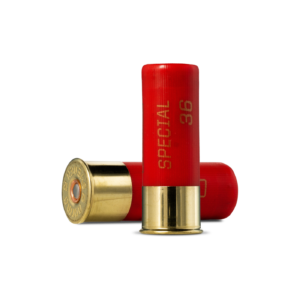
Here is the part almost nobody explains properly. Shotgun gauge is not a caliber, and it works in reverse.
Gauge is derived from an old artillery convention: it is the number of solid lead balls of bore diameter that together weigh one pound.
- 12 gauge = 12 lead balls of that bore size weigh one pound
- 20 gauge = 20 smaller balls weigh one pound
Because it takes more small balls to reach a pound, a bigger gauge number means a smaller bore. 12 gauge is larger than 20 gauge. 28 gauge is smaller still.
The exception: .410 is not a gauge at all. It is an actual caliber — .410 inches. It is the odd one out in the entire system.
| Gauge | Bore Diameter | Recoil | Best For |
|---|---|---|---|
| 12 Gauge | .729″ | Heavy | Home defense, waterfowl, deer, everything |
| 16 Gauge | .663″ | Moderate | Upland — the connoisseur’s gauge |
| 20 Gauge | .615″ | Moderate-light | Upland, youth, recoil-sensitive shooters |
| 28 Gauge | .550″ | Light | Quail, clays, pure enjoyment |
| .410 Bore | .410″ | Very light | Youth, pest control — not ideal for home defense |
Which Ammo Calibers Should You Buy?
| Your Situation | Buy This | Why |
|---|---|---|
| First gun ever | .22 LR | Learn fundamentals without recoil or cost |
| First defensive handgun | 9mm | Cheapest, most available, best capacity, proven |
| Concealed carry | 9mm (or .380 if size is critical) | Balance of effectiveness and shootability |
| Home defense (handgun) | 9mm | Capacity and follow-up speed matter most |
| Home defense (shotgun) | 12 gauge buckshot | Nothing else is this decisive at close range |
| First rifle / AR-15 | .223 / 5.56 | Cheap, low recoil, huge parts ecosystem |
| Deer hunting | .308 or .270 | Proven, ethical, available everywhere |
| Elk, moose, big bear | .338 Win Mag | Energy and penetration through heavy bone |
| Long-range shooting | 6.5 PRC or 6mm Creedmoor | Superior ballistic coefficient beyond 600 yds |
| Bear country / woods carry | 10mm or .44 Magnum | The only handgun ammo calibers with real authority on big animals |
| Revolver, one gun, two jobs | .357 Magnum | Shoots cheap .38 Special for practice, .357 for serious work |
| Tight budget, want to get good | .22 LR + 9mm | Volume practice + a real defensive caliber |
The two-caliber rule. If you want to be genuinely competent without going broke, own exactly two: .22 LR for volume training, and 9mm for serious use. That combination will make you a better shooter than 90% of people who own eight guns in eight different ammo calibers.
Common Mistakes With Ammo Calibers
- Assuming similar numbers mean compatibility. .38 Special and .357 Magnum share a bullet diameter. So do 9mm and .380. They are not interchangeable.
- Firing 5.56 NATO in a .223-only chamber. Pressure differences make this genuinely unsafe. Check your barrel stamp.
- Buying a caliber you cannot afford to practice with. A 10mm you shoot 100 rounds a year through makes you worse than a 9mm you shoot 1,000 through.
- Choosing recoil you cannot manage. A flinch will destroy your accuracy far more than a caliber will improve it.
- Owning five calibers and mastering none. Logistics, cost and storage all multiply. Consolidate.
- Buying an exotic caliber for a defensive gun. In a shortage, common ammo calibers are the ones you can still find.
- Believing gauge works like caliber. 20 gauge is smaller than 12 gauge. The number runs backwards.
- Using .410 for home defense. It is the smallest shotgun bore and a poor choice for a task where 12 or 20 gauge is available.
- Forcing a round that doesn’t chamber easily. SAAMI is explicit: never fire a cartridge that requires unusual force to close the action.
- Ignoring bullet weight. Caliber is only half the story. Our bullet grain weight guide covers the other half.
FAQ: Ammo Calibers Explained
What does caliber mean?
Caliber is the diameter of the bullet, measured in inches (.45 = 0.45 inches) or millimeters (9mm). But cartridge names are historical, not literal — a .38 Special actually fires a .357-inch bullet.
What is the most common ammo caliber?
9mm Luger for handguns, .223/5.56 for rifles, .22 LR for rimfire, and 12 gauge for shotguns. These four cover the overwhelming majority of ammunition sold in America.
Is 9mm or .45 ACP better?
For most people, 9mm — it is cheaper, holds more rounds, recoils less, and modern defensive loads have closed the terminal performance gap. .45 ACP remains excellent, especially in a 1911, but it is not meaningfully more effective with current ammunition.
Can I shoot .223 in a 5.56 rifle?
Yes. Federal Premium confirms you can shoot .223 Remington in a 5.56×45mm chamber, but not the other way around, because of pressure differences. Always check your barrel stamp.
Can I shoot .38 Special in a .357 Magnum?
Yes — safely and commonly. They share the same .357″ bullet diameter, and the .357 Magnum chamber is longer. The reverse is not safe. Never fire .357 Magnum in a .38 Special revolver.
Why is 20 gauge smaller than 12 gauge?
Because gauge is the number of lead balls of bore diameter that weigh one pound. It takes more small balls to reach a pound, so a higher gauge number means a smaller bore. The system runs backwards.
Is .380 the same as 9mm?
They fire the same .355″ bullet, but the .380 case is shorter and loaded to lower pressure — roughly 60% of 9mm energy. They are not interchangeable. Never load .380 in a 9mm firearm or vice versa.
What is the best caliber for self-defense?
9mm, loaded with a quality defensive hollow point. It is the standard for most American law enforcement, offers the best balance of capacity, recoil and effectiveness, and is the most available of the serious defensive ammo calibers.
What is the best caliber for deer hunting?
.308 Winchester or .270 Winchester. Both are proven, widely available, ethical on deer-sized game, and offer manageable recoil. .30-30 remains excellent in brush and lever guns at shorter range.
What is the best caliber for a beginner?
.22 LR without question. Almost no recoil, extremely cheap, and it teaches fundamentals that transfer directly to every other caliber. Every serious shooter still trains with rimfire.
Is a bigger caliber always better?
No — and believing so is the most common mistake in the subject. Bigger ammo calibers mean more recoil, higher cost, less capacity and less practice. Shot placement beats caliber, and practice beats everything.
What’s the difference between .308 and 7.62×51?
They share the same .308″ bullet and nearly identical dimensions. 7.62×51 NATO is typically loaded to slightly lower pressure with thicker case walls. Firing 7.62 NATO in a .308 rifle is common practice; check with your rifle’s manufacturer before doing the reverse.
What is 10mm good for?
Woods defense, hog hunting and bear country. It is the most powerful mainstream semi-auto handgun cartridge, but the recoil, cost and gun size make it a poor everyday concealed carry choice for most shooters.
Which caliber is cheapest to shoot?
.22 LR by an enormous margin — often a fraction of the cost of any centerfire round. Among centerfire ammo calibers, 9mm and .223 are the cheapest per round.
How many calibers should I own?
Two is enough for most people: .22 LR for volume practice and 9mm for serious use. Add .223 if you own an AR-15, .308 if you hunt, and 12 gauge if you want a home defense shotgun. Beyond that you are collecting, not equipping.
Does caliber matter more than bullet type?
No. A premium hollow point in 9mm outperforms a cheap FMJ in .45 ACP for defense every time. Bullet construction matters more than caliber — see our hollow point vs FMJ guide.
What does “ACP” mean?
Automatic Colt Pistol. It appears in .25 ACP, .32 ACP, .380 ACP and .45 ACP — all cartridges originally developed by John Browning for Colt semi-automatic pistols.
What does “Magnum” mean?
It has no strict technical definition. Generally it indicates a longer, higher-pressure case producing significantly more velocity and energy than a parent cartridge — .357 Magnum from .38 Special, .44 Magnum from .44 Special.
Why is .22 LR the same diameter as .223?
Coincidence of naming history. .22 LR uses a .223″ bullet and .223 Remington uses a .224″ bullet — but they are completely different cartridges with vastly different case sizes, pressures and power. They are absolutely not interchangeable.
Can I fire ammo not marked on my barrel?
No. SAAMI is explicit: always confirm the cartridge designation on the headstamp matches the designation on the barrel. If a round requires unusual force to chamber, stop immediately and do not fire it.
The Bottom Line on Ammo Calibers
The caliber debate consumes more oxygen than any other subject in shooting, and it deserves far less than it gets.
Here is the truth nobody selling you a gun wants to say: the differences between the serious ammo calibers are smaller than the differences between shooters. A competent shooter with 9mm will beat an incompetent one with .45, .40, or 10mm — decisively, every time, under any conditions.
So pick the caliber that lets you shoot the most. That is almost always .22 LR for training and 9mm for serious use, with .223 if you have an AR and .308 if you hunt. Buy those four and you have covered every reasonable civilian need on earth.
Then stop reading about calibers and go shoot. That is where the actual improvement lives.
Shop by Caliber
Trigger Ammo Store stocks every caliber in this guide — and dozens more — from the manufacturers worth trusting.
- Shop Handgun Ammo — 9mm, .45 ACP, .40 S&W, .38 Special, .357 Magnum, .44 Magnum and more
- Shop Rifle Ammo — .223, .308, .270, 6.5 PRC, .30-30, .45-70, .338 and the full lineup
- Shop Rimfire Ammo — .22 LR, .22 WMR, .17 HMR, .22 Short
- Shop Shotgun Ammo — 12, 16, 20, 28 gauge and .410
Fast, discreet, nationwide shipping. Not sure which caliber fits your firearm? Get in touch — we answer seven days a week.
Disclaimer: This guide is provided for educational purposes and does not constitute legal or firearms-safety advice. Never fire ammunition that is not explicitly marked on your firearm’s barrel. Always consult your firearm’s manufacturer regarding cartridge compatibility. Ammunition laws vary by state, county and municipality. Technical guidance is drawn from SAAMI standards, manufacturer documentation, and NSSF safety resources.