
Buying ammo for the first time is genuinely intimidating. You open a website and get hit with a wall of numbers, abbreviations and calibers that all look vaguely similar — 9mm, .380, .38, .357 — and nobody explains which one goes in your gun. Buy the wrong box and at best you have wasted money. At worst you have created a safety problem. This guide walks you through buying ammo step by step, in plain English, with no assumed knowledge.
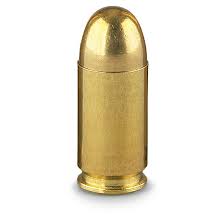
Buying Ammo: The Quick Answer
Check the caliber stamped on your firearm’s barrel and buy only that caliber — never anything that “looks close.” Buy FMJ for the range, jacketed hollow points for self-defense, and soft points for hunting. Buy in bulk to save money, and store it cool and dry. If in doubt, read the barrel, not the box.
Key Takeaways
- The barrel is the truth. Whatever caliber is stamped on your barrel is the only ammunition you may safely fire. No exceptions.
- Similar names are not compatible. .380 and 9mm fire the same diameter bullet and are not interchangeable. Neither are .38 Special and .357 Magnum in both directions.
- You need two types minimum: cheap FMJ for practice, and a premium hollow point for defense. Never carry FMJ.
- Cheaper ammo makes you a better shooter — because you can afford to shoot more of it. Volume beats caliber.
- Buying ammo in bulk is the correct move once you know how to store it. Shipping costs roughly the same for a box or a case.
- Never buy ammo for a gun you have not identified. Read the barrel stamp. If you cannot read it, take the firearm to a gunsmith.
Step 1: Find Out What Caliber Your Gun Takes
This is the entire foundation. Get it wrong and nothing else matters.
The caliber is stamped on your firearm — almost always on the barrel, sometimes on the slide or frame. It will read something like “9mm Luger,” “.45 ACP,” “5.56 NATO,” or “.308 WIN.”
Where to Look
| Firearm Type | Where the Caliber Is Stamped |
|---|---|
| Semi-auto pistol | Side of the barrel, visible through the ejection port — or on the slide |
| Revolver | Side of the barrel |
| Rifle | Side of the barrel, near the receiver |
| AR-15 | Barrel, just forward of the receiver — often under the handguard |
| Shotgun | Barrel — shows gauge and chamber length, e.g. “12 GA 3in” |
The one rule you never break: only fire the cartridge marked on your barrel. SAAMI’s guidance is explicit — always confirm the cartridge designation on the ammunition matches the designation on the firearm. If a round requires unusual force to chamber, stop immediately. Something is wrong.
Why “Close Enough” Can Hurt You
The naming conventions in this industry are a historical mess, and they create real traps for anyone buying ammo for the first time:
- .380 ACP and 9mm Luger fire the exact same .355″ bullet. They are not interchangeable. Different case lengths, different pressures.
- .38 Special and .357 Magnum fire the exact same .357″ bullet. A .357 revolver can safely fire .38 Special. A .38 Special revolver must never fire .357 Magnum.
- .223 Remington and 5.56 NATO look identical. You can fire .223 in a 5.56 chamber. You must not fire 5.56 in a .223-only chamber.
- .40 S&W and 10mm Auto share a .400″ bullet. Completely different cartridges.
If you take one thing from this guide, take this: read the barrel, not the box. Our .380 vs 9mm guide and .357 vs .38 Special guide cover these traps in detail.
Step 2: Learn to Read an Ammo Box
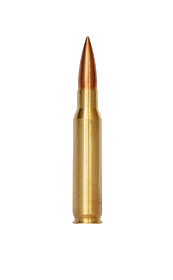
A typical box reads: 9mm Luger · 115 GR · FMJ · 1180 FPS · 50 RDS
| What It Says | What It Means | Does It Matter? |
|---|---|---|
| 9mm Luger | The caliber. Must match your barrel. | Critical |
| 115 GR | Bullet weight in grains. Heavier = slower, more of a “push.” | Matters |
| FMJ | Bullet type. FMJ = full metal jacket = practice ammo. | Very important |
| 1180 FPS | Muzzle velocity, feet per second. | Informational |
| 50 RDS | Rounds in the box. | Just a count |
What Is a “Grain”?
A grain is a unit of weight — 7,000 grains to a pound. It describes how heavy the bullet is, not how much gunpowder is in the cartridge, which is what most beginners assume.
- Lighter bullets (115gr in 9mm, 55gr in .223) — faster, flatter, snappier recoil, cheaper
- Heavier bullets (147gr in 9mm, 77gr in .223) — slower, more momentum, a “push” recoil, better suppressed
For a beginner buying ammo for practice: buy the cheapest common weight. That is 115gr in 9mm and 55gr in .223. Our bullet grain weight guide goes deeper when you are ready.
The Abbreviations You Will See
| Abbreviation | Means | Use It For |
|---|---|---|
| FMJ | Full Metal Jacket | Range practice. Never for defense. |
| TMJ | Total Metal Jacket | Indoor ranges — less airborne lead |
| JHP / HP | (Jacketed) Hollow Point | Self-defense. Expands on impact. |
| SP / JSP | Soft Point | Hunting |
| OTM / HPBT | Open Tip Match | Precision shooting. Not for defense despite the hollow tip. |
| LRN | Lead Round Nose | Cheap revolver practice |
| +P | Higher-pressure load | Only if your gun is rated for it. Check the manual. |
Step 3: Buy the Right Bullet Type for the Job
This is where most beginners buying ammo go wrong — and one of the mistakes is genuinely dangerous.
| Your Job | Buy This | Never Buy This | Why |
|---|---|---|---|
| Range practice | FMJ | Premium JHP | Same recoil, a fraction of the cost |
| Self-defense / carry | Premium JHP | FMJ | FMJ shoots through walls and does not stop the threat |
| Home defense (handgun) | Premium JHP | FMJ | Over-penetration risk to your family |
| Home defense (shotgun) | Buckshot | Birdshot | Birdshot does not penetrate enough to stop a threat |
| Deer hunting | Soft point or bonded | FMJ — illegal in most states | FMJ passes through without expanding. Unethical. |
| Target / competition | OTM or wadcutter | — | Accuracy over terminal effect |
The Most Important Sentence in This Guide
Do not carry FMJ for self-defense.
FMJ is designed not to expand. It punches straight through a target and keeps going — through drywall, through interior walls, and into whatever is on the other side. That “whatever” might be a family member.
A hollow point expands and stops inside the threat. That is not about being more destructive. It is about the bullet stopping where it is supposed to stop. Hollow points are the safer choice, which is why virtually every police department in America issues them.
Our hollow point vs FMJ guide covers this fully, and the 9mm self-defense ammo guide covers which loads actually work.
Step 4: What Does It Cost?
Cost is the variable nobody tells beginners about, and it matters more than almost anything else — because the ammunition you can afford is the ammunition you will actually practice with, and practice is what makes you good.
| Caliber | Relative Cost per Round | Notes |
|---|---|---|
| .22 LR | $ — cheapest by far | Often a fraction of any centerfire round |
| 9mm | $$ — cheapest centerfire handgun | The reason 9mm is the correct default |
| .223 / 5.56 | $$ — cheapest centerfire rifle | Excellent value for volume practice |
| .38 Special | $$$ — moderate | — |
| .45 ACP | $$$ — 2 to 3x the cost of 9mm | Adds up fast at volume |
| .308 | $$$$ — expensive | Worth it for hunting and precision |
| 6.5 PRC | $$$$$ — premium | Long-range specialist |
| Defensive JHP, any caliber | $$$$$ — 3 to 5x the FMJ price | You buy this once a year, not weekly |
Prices move constantly with market conditions. Check current pricing before you buy.
The insight most beginners miss: a shooter who fires 2,000 rounds of 9mm a year will out-shoot a shooter who fires 200 rounds of .45 — every time, on any target, under any conditions. Skill beats caliber. Affordability buys skill.
Step 5: How Much Should You Buy?
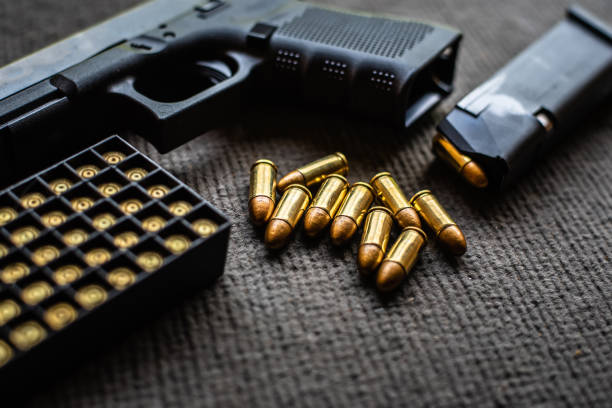
| You Are… | Buy This Much | Reasoning |
|---|---|---|
| Brand new, first range trip | 100–200 rounds | You will shoot more than you think. Bring extra. |
| Taking a class | 500+ rounds | Check the round count your instructor requires |
| Regular monthly shooter | 1,000+ rounds — a case | Cost per round drops meaningfully |
| Building a defensive reserve | 1 box to carry + 50 rounds to test | Function-test before you trust it |
| Serious practice | Buy cases, not boxes | Shipping costs roughly the same either way |
Why Bulk Is the Right Answer
Ammunition is a hazardous material. Every order carries fixed shipping overhead — ground-only transit, hazmat packaging, adult signature. That cost barely changes between a 50-round box and a 1,000-round case.
Which means small orders are poor value, and the economics push hard toward buying in quantity. The only thing stopping most people is not knowing how to store it — and stored properly, ammunition stays reliable for decades.
Step 6: Where to Buy Ammo
| Local Gun Store | Big Box Retailer | Online | |
|---|---|---|---|
| Price | Highest | Moderate | Lowest |
| Selection | Limited | Limited | Enormous |
| Bulk availability | Rare | Rare | Standard |
| Expert advice | Best | Poor | Varies |
| Instant | Yes | Yes | No — 3 to 7 days |
| During a shortage | Empty shelves | Empty shelves | Better, but limits apply |
The honest recommendation: use your local shop for advice and for the odd box you need today. Buy your volume online. The savings on a single case will often exceed what you would pay in a store for a fraction of the rounds.
Buying ammo online is legal under federal law in most states, though seven jurisdictions restrict it. Check with us before you order if you are unsure about your state.
Step 7: Store It Properly
You have just bought ammunition. Now protect it.
- Cool: 55–85°F. Never an attic, garage or car trunk.
- Dry: under 50% relative humidity. Moisture kills ammunition — not age.
- Sealed: original box, inside a gasketed ammo can, with a desiccant packet.
- Separate from firearms and inaccessible to children. This is explicit SAAMI guidance.
- Away from solvents. Never store ammunition in the same cabinet as cleaning chemicals — vapor alone contaminates primers.
Do this and ammunition you buy today will still fire reliably in thirty years. Ignore it and one humid summer can ruin a case.
Step 8: The Safety Rules That Apply to Ammunition
- Only fire the caliber stamped on your barrel. Never force a round that does not chamber easily.
- Inspect ammunition before you shoot it. Green corrosion, dents, cracked cases, loose bullets — discard them.
- If a shot sounds weak or feels wrong, STOP. That may be a squib — a bullet stuck in the barrel. Firing another round behind it can destroy the gun and injure you.
- After a click with no bang, wait 30 seconds with the muzzle pointed downrange before opening the action. Delayed ignition is rare but real.
- Never mix ammunition types in one magazine.
- Check your +P rating. Higher-pressure loads are not safe in every firearm. Read the manual.
- Wear eye and ear protection. Always.
The NSSF publishes free firearm safety resources worth reading before your first range trip.
Common Beginner Mistakes When Buying Ammo
- Buying by name instead of by barrel stamp. “.38” is not “.380.” Read the gun.
- Carrying FMJ for defense. The single most dangerous mistake a new gun owner makes.
- Buying birdshot for home defense. It does not stop a threat. Buy buckshot.
- Buying OTM match ammo “because it has a hollow point.” Match bullets do not expand. The hole is a manufacturing artifact.
- Practicing with premium defensive ammo. A waste of money. Practice with FMJ.
- Never function-testing carry ammo. Shoot at least one full magazine of your carry load through your actual gun. Discovering a feeding problem in an emergency is not acceptable.
- Buying one box at a time. Hazmat shipping overhead makes small orders poor value.
- Storing it in the garage. Temperature swings condense water onto your brass hundreds of times a year.
- Buying an exotic caliber for a first gun. In a shortage, common calibers are the ones you can still find.
- Assuming expensive means better. A bonded elk bullet is the wrong choice for a paper target.
Your First Ammo Shopping List
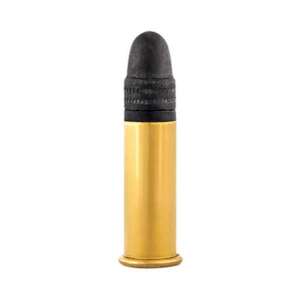
If You Own a 9mm Pistol
- 500–1,000 rounds of 9mm 115gr FMJ — range practice
- 1–2 boxes of premium 124gr or 147gr JHP — defense. Function-test 50, carry the rest.
If You Own an AR-15
- 500–1,000 rounds of .223 / 5.56 55gr FMJ — range practice
- 1 box of 62–77gr bonded or soft point — defense or hunting
- Check your barrel stamp first — 5.56, .223, or .223 Wylde
If You Own a Revolver
- .38 Special — cheap practice, and it works in .357 revolvers too
- .357 Magnum JHP — defense, if your gun is chambered for it
If You Own a Shotgun
- 12 gauge birdshot — clays and practice
- 00 buckshot — home defense
- Slugs — deer, if you hunt
If You Own a .22
- Bulk .22 LR 40gr — shoot thousands. This is how you actually get good.
FAQ: Buying Ammo for Beginners
How do I know what ammo my gun takes?
Read the caliber stamped on the barrel. On pistols it is usually visible through the ejection port; on rifles it is near the receiver. Buy only that caliber. If you cannot read the stamp, take the firearm to a gunsmith — do not guess.
What does “grain” mean on an ammo box?
It is the weight of the bullet — 7,000 grains to a pound. It is not the amount of gunpowder. Lighter bullets are faster and snappier; heavier ones are slower with more of a push.
What is the difference between FMJ and hollow point?
FMJ does not expand — it is cheap practice ammo that over-penetrates. Hollow point expands on impact and stops in the target. FMJ for the range. Hollow point for defense. Never mix them up.
Can I use range ammo for self-defense?
You should not. Range ammo is FMJ, which shoots through walls and does not reliably stop a threat. Buy proper defensive hollow points and function-test them in your gun.
Is .380 the same as 9mm?
No. They fire the same .355″ bullet but have different case lengths and pressures. They are not interchangeable. Never load .380 in a 9mm firearm or the reverse.
Can I shoot .38 Special in a .357 Magnum?
Yes — safely and commonly. The reverse is not safe. Never fire .357 Magnum in a .38 Special revolver.
Can I shoot 5.56 in a .223 rifle?
No. You can shoot .223 in a 5.56 chamber, but not the other way around, because of pressure differences. Check your barrel stamp — many ARs are marked 5.56 or .223 Wylde and handle both.
What is the cheapest caliber to shoot?
.22 LR by an enormous margin. Among centerfire calibers, 9mm and .223 are cheapest. This matters more than beginners realize — the ammunition you can afford is the ammunition you will actually practice with.
How much ammo should I buy for my first range trip?
100–200 rounds. You will shoot more than you expect. Bring extra rather than cutting the session short.
Is it cheaper to buy ammo online?
Almost always, especially in bulk. Ammunition ships as a hazardous material with fixed overhead, so a case costs about the same to ship as a box — which makes buying in quantity substantially better value.
Is buying ammo online legal?
Yes under federal law, in most states. Seven jurisdictions — California, New York, New Jersey, Massachusetts, Connecticut, Illinois and Washington D.C. — restrict direct-to-home delivery. Check your state and your city before ordering.
How old do I have to be to buy ammo?
Under federal law: 18 for rifle and shotgun ammunition, 21 for handgun ammunition. Some states set a higher bar. Ammunition a handgun can chamber counts as handgun ammunition.
What does +P mean?
A higher-pressure load producing more velocity and energy. Only use it if your firearm is rated for it — check the manual. +P in a gun not built for it accelerates wear and can be unsafe.
Does ammo expire?
No. Properly stored ammunition stays reliable for decades. Badly stored ammunition can fail in a few years. Conditions matter, not the calendar.
Where should I store my ammo?
An interior closet — cool, dry, stable. In original boxes, inside a sealed ammo can, with a desiccant packet. Never the attic, garage or car trunk.
Can I mix different ammo in one magazine?
Do not. Different loads have different recoil impulses and feeding characteristics, which can cause malfunctions. One load per magazine.
How do I know if my ammo is bad?
Look for green or white crusty corrosion, deep dents, cracked case necks, corroded primers, or bullets that wiggle loose. Light tarnish is cosmetic and fine. If in doubt, do not chamber it.
What ammo should I buy first?
Whatever caliber your gun takes, in FMJ, in the cheapest common bullet weight. Get comfortable. Then buy one box of quality defensive hollow points and function-test them.
What is the single biggest mistake beginners make?
Carrying FMJ for self-defense. It does not expand, it over-penetrates, and it puts everyone behind your target at risk. Practice with FMJ. Carry hollow points. Never the reverse.
The Bottom Line on Buying Ammo
Buying ammo feels complicated for about a month, and then it never does again. Here is everything, compressed:
- Read the barrel. Buy that caliber. Nothing that “looks close.”
- Buy FMJ for the range, in the cheapest common bullet weight.
- Buy quality JHP for defense. Test 50 rounds. Carry the rest.
- Buy in bulk. Shipping costs roughly the same either way.
- Store it cool, dry and sealed. It will outlive you.
That is the whole skill. Everything beyond that is refinement — and refinement comes from shooting, not from reading.
So buy a case of the cheap stuff, go shoot it, and come back when you have specific questions. That is genuinely the fastest path to competence.
Start Here
Trigger Ammo Store carries everything in this guide — from bulk practice ammo to premium defensive loads, across every major caliber.
- Shop Handgun Ammo — 9mm, .45 ACP, .38 Special, .357 Magnum and more
- Shop Rifle Ammo — .223, .308, 6.5 PRC and the full lineup
- Shop Rimfire Ammo — .22 LR, .22 WMR, .17 HMR
- Shop Shotgun Ammo — 12, 16, 20, 28 gauge and .410
New to this and not sure what you need? Ask us — tell us what gun you have and what you want to do with it, and we will point you at the right box. No pressure, no upsell. We answer seven days a week.
Disclaimer: This guide is educational and does not constitute legal or firearms-safety advice. Never fire ammunition not explicitly marked on your firearm’s barrel. Always consult your firearm’s manual and manufacturer. Ammunition laws vary by state, county and municipality. Technical guidance is drawn from SAAMI standards, manufacturer documentation, ATF regulations and NSSF safety resources. If you are new to firearms, take a certified safety course before your first range trip.
