
Understanding bullet types is the difference between buying ammunition and choosing it. Two boxes of 9mm on the same shelf, same caliber, same weight, can behave in completely opposite ways when they hit something — because the bullet types inside them were engineered for opposite jobs. This guide explains every bullet type you will encounter, what each one actually does, and exactly which to buy for the range, for defense, for hunting and for precision.
Bullet Types Explained: The Quick Answer
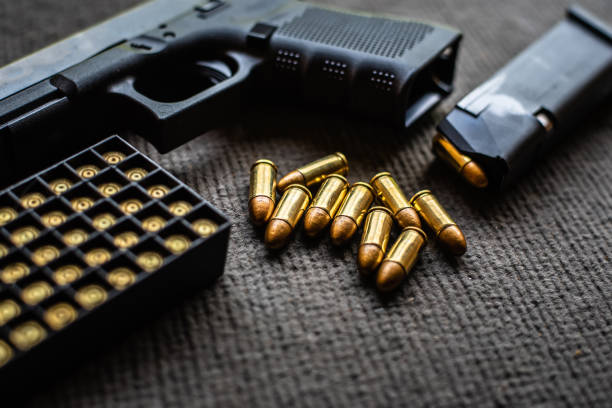
The main bullet types are FMJ (full metal jacket) for range training, JHP (jacketed hollow point) for self-defense, soft point and bonded bullets for hunting, ballistic tip for long-range hunting, OTM for match shooting, and frangible for steel targets. FMJ penetrates without expanding. Hollow points expand and stop. Everything else is a variation engineered between those two extremes.
Key Takeaways
- Caliber tells you the size. Bullet types tell you the job. The bullet type matters more than most shooters realize.
- Every bullet is a trade between penetration and expansion. All bullet types sit somewhere on that spectrum.
- FMJ is for practice, not defense. It over-penetrates and does not expand.
- JHP is the defensive standard and is what nearly every police department in America carries.
- Hunting bullet types must match the game. A varmint bullet on an elk is a wounded animal; an elk bullet on a coyote is a pass-through.
- “Hollow point” does not always mean expansion. Match bullets have a hollow tip for accuracy, not terminal performance — this confuses thousands of shooters every year.
- Buy two bullet types minimum: cheap FMJ for volume practice, premium JHP for carry. Practice with what is affordable; carry what is proven.
Why Bullet Types Matter More Than Caliber
Shooters argue endlessly about caliber. 9mm versus .45. .223 versus .308. Those arguments consume the internet.
Meanwhile, the more consequential decision goes almost unexamined. A premium hollow point in 9mm will outperform a cheap FMJ in .45 ACP for defensive purposes every single time. The bullet types you choose have a larger effect on outcome than the caliber printed on the box.
Here is why. A cartridge does exactly one thing: it delivers a projectile to a target at a velocity. What happens after that projectile arrives is entirely determined by how the bullet was built. Two bullets of identical weight, fired at identical speed, from the identical gun, can produce completely different results — because one was engineered to hold together and one was engineered to come apart.
That engineering is what we mean when we talk about bullet types. And once you understand it, the ammunition aisle stops being confusing.
The Three Variables Behind All Bullet Types
Every bullet ever made is a combination of three decisions. Learn these and you can decode any box of ammunition without reading the marketing.
Variable 1: The Jacket
The jacket is the metal skin — usually copper or a copper alloy — wrapped around the bullet’s core.
- No jacket (bare lead) — cheap, soft, fouls the barrel, low velocity only
- Partial jacket (lead exposed at the tip) — controlled expansion
- Full jacket (lead fully enclosed except the base) — deep penetration, no expansion
- Total jacket (lead enclosed on all sides including the base) — no airborne lead
Variable 2: The Nose
The nose determines what happens on impact — and it is the single biggest differentiator between bullet types.
- Round nose — feeds reliably, penetrates, does not expand
- Flat nose — cuts a cleaner hole, transfers more energy
- Hollow cavity — expands on impact (or improves accuracy, depending on why it is there)
- Polymer tip — aerodynamic in flight, initiates expansion on impact
- Soft exposed lead — mushrooms progressively
Variable 3: The Base
The rear of the bullet, which mostly affects flight rather than terminal performance.
- Flat base — simpler, often more accurate at short range
- Boat tail — tapered rear, reduces drag, better long-range performance
Important: “Boat tail” is not a bullet type. It is a base shape that can be combined with almost any of the bullet types below. You will see “JHP boat tail,” “FMJ boat tail,” “OTM boat tail.” The boat tail describes the back; the bullet type describes the front.
All Bullet Types Compared: The Master Table
| Bullet Type | Abbrev. | Expands? | Penetration | Accuracy | Cost | Best Use |
|---|---|---|---|---|---|---|
| Full Metal Jacket | FMJ | ❌ No | Very deep | Good | $ | Range, training, volume practice |
| Total Metal Jacket | TMJ | ❌ No | Very deep | Good | $$ | Indoor ranges, lead-sensitive shooters |
| Lead Round Nose | LRN | ❌ No | Moderate | Fair | $ | Cheap revolver practice, cowboy action |
| Wadcutter | WC | ❌ No | Shallow | Excellent | $$ | Bullseye target shooting, clean scoring holes |
| Semi-Wadcutter | SWC | ❌ No | Moderate | Very good | $$ | Revolver target, small game |
| Jacketed Hollow Point | JHP | ✅ Yes | Controlled | Very good | $$$ | Self-defense, duty, home defense |
| Soft Point | SP / JSP | ✅ Yes | Deep | Good | $$ | Hunting, lever guns, tough game |
| Ballistic Tip / Polymer Tip | BT | ✅ Yes | Moderate–deep | Excellent | $$$ | Long-range hunting, varmint |
| Bonded | — | ✅ Yes | Very deep | Very good | $$$$ | Big game, barrier-blind duty ammo |
| Monolithic / Solid Copper | — | ✅ Yes | Very deep | Excellent | $$$$ | Big game, lead-free zones |
| Open Tip Match | OTM / HPBT | ⚠️ Unreliable | Varies | Exceptional | $$$ | Precision, competition, long range |
| Frangible | — | N/A — disintegrates | Very shallow | Good | $$$ | Close-range steel, shoot houses |
Everything else you will see on a shelf is a marketing name for one of these bullet types, or a hybrid of two. Once you can classify a box into this table, you can buy intelligently.
Bullet Types for Range and Training
This is where the vast majority of your ammunition budget goes, and where the cheapest bullet types are exactly the right answer.
Full Metal Jacket (FMJ)
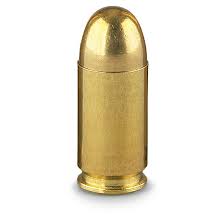
A lead core completely wrapped in a copper jacket, except at the base. The most common bullet type on earth.
| Purpose | Cheap, reliable, high-volume practice |
| Advantages | Lowest cost per round · feeds reliably in every action · consistent · doesn’t foul the barrel · stores well |
| Disadvantages | Does not expand · over-penetrates badly · poor energy transfer |
| Penetration | Very deep — often far more than intended |
| Expansion | None. By design. |
| Typical velocity | 1,000–1,300 fps (handgun) · 2,700–3,200 fps (rifle) |
| Common calibers | 9mm, .45 ACP, .223, 7.62×51 |
The critical warning: FMJ is not a defensive bullet. It punches straight through and keeps going — through drywall, through interior walls, and into whatever is on the other side. Practice with FMJ. Never carry it.
For volume training, stock 9mm FMJ and .223 FMJ — the two most cost-effective ways to actually shoot enough to get good.
Total Metal Jacket (TMJ)
Identical to FMJ, but the jacket encloses the base as well. That small difference matters more than it sounds.
With standard FMJ, the exposed lead base is vaporized by burning powder, putting airborne lead into the air. In an indoor range with poor ventilation, that adds up. TMJ eliminates it.
Buy TMJ if: you shoot indoors regularly, you are pregnant or shoot with people who are, or your range mandates it. Otherwise FMJ is fine and cheaper.
Lead Round Nose (LRN)
Bare, unjacketed lead. The oldest of the bullet types still in common production.
Advantages: cheapest possible ammunition, easy on the barrel at low velocity, excellent for cowboy action and vintage revolvers.
Disadvantages: heavy lead fouling, smoke, cannot be pushed to high velocity without leading the bore badly, banned at many indoor ranges.
Best in .38 Special and .45 Colt, where velocities are low and the economics make sense.
Wadcutter and Semi-Wadcutter
A wadcutter is a flat-fronted cylinder — it looks like a lead pellet, not a bullet. It exists for one reason: it punches a clean, perfectly round hole in paper, which makes scoring unambiguous in bullseye competition.
A semi-wadcutter (SWC) is the compromise: a cone with a sharp shoulder. It still cuts a clean hole, but feeds better and flies further. It is the classic small-game and target revolver bullet.
Both are among the most accurate bullet types available at short range — and both are essentially useless past 50 yards.
Bullet Types for Self-Defense
This is the category where getting it wrong has real consequences, and where the cheap option is the wrong option.
Jacketed Hollow Point (JHP)
A lead core in a copper jacket, with a cavity in the nose. On impact with soft tissue, the cavity fills, hydraulic pressure forces the nose outward, and the bullet mushrooms.
| Purpose | Stop a threat while limiting over-penetration |
| Advantages | Expands to 1.5–2× original diameter · dumps energy in the target · reduces risk to bystanders behind the threat · the law enforcement standard |
| Disadvantages | 3–5× the cost of FMJ · can clog and fail to expand through heavy clothing (cheap ones) · some older pistols feed it poorly |
| Penetration | Controlled — the FBI protocol target is 12–18 inches in ballistic gelatin |
| Expansion | Yes, and it is the entire point |
| Common calibers | 9mm, .380, .40 S&W, .45 ACP, .357 Magnum |
Why hollow points are actually the safer choice. This surprises people. A hollow point that expands stops in the threat. An FMJ passes through and continues at lethal velocity into whatever is behind — a neighbor’s wall, a family member, a bystander. Expansion is not about being more destructive. It is about the bullet stopping where it is supposed to stop.
Our hollow point vs FMJ guide covers this comparison in depth, and our 9mm self-defense ammo guide covers which specific loads have the strongest track record.
Bonded Bullets
A hollow point where the lead core is chemically or electrochemically bonded to the jacket, so the two cannot separate on impact.
Standard hollow points can shed their core when they hit a hard barrier — auto glass, a car door, heavy bone. When the core and jacket separate, penetration collapses. Bonded bullets hold together and keep driving.
This is why bonded bullet types dominate law enforcement duty ammunition. Officers shoot through windshields. Bonded construction is what makes that survivable as a tactic. For home defense, bonded is a genuine upgrade over standard JHP if your budget allows.
Frangible Hollow Point
A newer hybrid: a frangible core in a hollow point profile. It fragments aggressively in soft tissue and disintegrates against hard barriers — the theory being minimal over-penetration in an apartment or a shoot-house.
The performance data is genuinely contested. Some tests show impressive results; others show penetration that falls short of the FBI’s 12-inch minimum. If you carry one, verify it against published gel testing rather than marketing copy.
Bullet Types for Hunting
Hunting is where matching bullet types to the job is not just about performance — it is an ethical obligation. The wrong bullet wounds an animal and loses it.
Soft Point (SP / JSP)
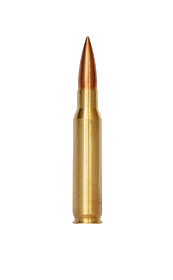
A jacketed bullet with the lead nose left exposed. The simplest and oldest of the expanding bullet types, and still one of the best.
| Purpose | Reliable expansion with deep penetration on game |
| Advantages | Expands across a wide velocity range · penetrates deeply · tough · affordable · feeds well in lever actions where pointed tips are unsafe in tube magazines |
| Disadvantages | Less aerodynamic than a polymer tip · slightly less precise at extreme range · exposed lead can deform in the magazine |
| Best for | Deer, hogs, black bear, medium-to-large game at moderate range |
| Common calibers | .308, .270, .30-30, .45-70 |
Ballistic Tip / Polymer Tip
A hollow point with a hard polymer insert in the cavity. The tip does two jobs: it restores the aerodynamic profile the hollow cavity destroyed, and on impact it acts as a wedge, driving backward to initiate expansion.
This is the best of both worlds — and its greatest weakness. Polymer tip bullet types fly flatter and hit harder at distance than any soft point. But cheap ones can expand too violently on close-range, high-velocity impacts, producing shallow wounds on heavy game.
Buy premium polymer tips for big game. Budget ballistic tips are excellent for varmints and thin-skinned deer, and a poor choice for elk. Popular in 6.5 PRC, 6mm Creedmoor and .270.
Monolithic / Solid Copper
A single piece of solid copper or gilding metal, machined with a hollow nose. No lead core at all.
Advantages: because there is no core to separate from a jacket, these bullet types retain 95–100% of their weight through bone, hide and muscle. They penetrate enormously. They are also lead-free, which is legally mandatory in California and increasingly common elsewhere.
Disadvantages: expensive, and they need velocity to open reliably. A solid copper bullet that fails to expand behaves like a very slow FMJ.
The right choice for elk, moose and bear — .338 Win Mag, .375 H&H — and anywhere lead ammunition is restricted. Hornady and other major manufacturers publish detailed load data for these.
Varmint Bullets
Thin-jacketed, explosively fragile bullets designed to come apart completely on a small animal.
The purpose is twofold: instant lethality on prairie dogs and coyotes, and no ricochet — the bullet disintegrates rather than skipping across a field toward a farmhouse. Common in .204 Ruger, .22 Hornet and .223.
Never use varmint bullet types on deer-sized game. They fragment on the surface and produce a shallow, non-lethal wound.
Bullet Types for Precision and Match Shooting
Open Tip Match (OTM / HPBT)
This is the single most misunderstood entry in the entire list of bullet types, and getting it wrong is common.
An OTM bullet has a hole in the nose. It is not a hollow point.
Here is why the hole exists. Match bullets are made by drawing the jacket from the nose backward rather than the base forward, which produces a far more uniform, concentric base — and base uniformity is what drives accuracy. The tiny hole left at the tip is a manufacturing artifact, not an expansion cavity. It is too small and too poorly shaped to reliably initiate expansion.
Federal Premium describes open tip match bullets as being made primarily for target shooting.
Practical consequences:
- OTM is the most accurate of all bullet types. Nothing else comes close for long-range precision.
- OTM is not a self-defense bullet, despite the hole in the nose.
- OTM is not a hunting bullet — expansion is inconsistent and unethical on game.
- Buying OTM because it “has a hollow point” is one of the most frequent mistakes new shooters make.
Load OTM for 6.5 PRC, .338 Lapua, 7.62×51 and any precision rifle where the target is paper or steel.
Boat Tail (HPBT, FMJBT)
Again: not a bullet type — a base shape. The tapered rear reduces aerodynamic drag, which improves the ballistic coefficient and reduces wind drift and drop at long range.
Under about 300 yards, a boat tail offers almost no measurable advantage. Beyond 500, it becomes significant. Beyond 800, it is essential.
Specialty Bullet Types
Frangible
Frangible bullets are made from compressed powdered metal — typically a copper and tin blend — compacted under high pressure and sintered so the particles fuse without fully melting. The result is a bullet solid enough to fly accurately but brittle enough to disintegrate into dust against a hard surface.
Why it exists: ricochet and splash-back. On steel targets at close range, a conventional bullet can bounce fragments back toward the shooter. Frangible bullet types turn to powder instead. This is why they are the standard for law enforcement shoot-house and close-quarters training.
Trade-offs: more expensive than FMJ, and the softer projectile can foul barrels faster with heavy use. Use it where it earns its keep — close steel — not for general volume practice.
Shotgun Projectiles (A Different World Entirely)
Shotgun bullet types do not follow the same logic at all:
- Birdshot — dozens to hundreds of tiny pellets. Wings and clays. Not a defensive load.
- Buckshot — 8–27 large pellets. The premier close-range defensive shotgun load.
- Slug — a single large projectile. Deer, bear, and any situation needing range and penetration.
Browse 12 gauge and 20 gauge for the full range.
Which Bullet Types Should You Buy?
| Your Job | Buy This Bullet Type | Not This | Why |
|---|---|---|---|
| Range practice, high volume | FMJ | JHP | Same recoil, one-fifth the price |
| Indoor range | TMJ or frangible | Bare lead | Airborne lead exposure |
| Concealed carry | Premium JHP | FMJ, OTM | Expansion + controlled penetration |
| Home defense (handgun) | Premium JHP | FMJ | Over-penetration through walls |
| Home defense (shotgun) | Buckshot | Birdshot | Birdshot lacks penetration to stop a threat |
| Deer hunting | Soft point or bonded | FMJ, OTM, varmint | Ethical, reliable expansion |
| Elk, moose, bear | Bonded or monolithic | Ballistic tip (budget) | Needs deep penetration through heavy bone |
| Varmint / predator | Varmint or polymer tip | FMJ, bonded | Fragmentation prevents ricochet |
| Long-range precision | OTM / HPBT | FMJ, soft point | Nothing else is this accurate |
| Close-range steel | Frangible | FMJ | Eliminates splash-back |
| Bullseye competition | Wadcutter | Round nose | Clean scoring holes |
The minimum viable ammunition locker: cheap FMJ in bulk for practice, and one premium JHP load you have function-tested in your carry gun. That is 90% of what most shooters actually need. Everything else is specialization.
And once you buy in bulk, store it correctly — bullet types do not matter if humidity has killed the primer.
Bullet Types by Caliber: What Actually Exists
| Caliber | Common Bullet Types Available | Best Seller |
|---|---|---|
| 9mm | FMJ, TMJ, JHP, bonded, frangible | 115gr FMJ (practice) / 124gr JHP (carry) |
| .45 ACP | FMJ, JHP, bonded, SWC | 230gr FMJ / 230gr JHP |
| .38 Special | LRN, SWC, wadcutter, JHP | 158gr LRN / 125gr JHP |
| .357 Magnum | JHP, soft point, SWC | 158gr JHP |
| .223 / 5.56 | FMJ, soft point, polymer tip, OTM, varmint | 55gr FMJ (practice) / 62gr bonded (defense) |
| .308 Winchester | FMJ, soft point, bonded, OTM, monolithic | 150–180gr soft point (hunting) |
| 6.5 PRC | Polymer tip, OTM, monolithic | 140–147gr match / polymer tip |
| .22 LR | LRN, hollow point, segmented | 40gr LRN (bulk) / 36gr HP (small game) |
Confused by the grain numbers? Our bullet grain weight guide explains exactly what those figures mean and how to choose.
Common Mistakes With Bullet Types
- Carrying FMJ for self-defense. It over-penetrates and does not expand. This is the most dangerous mistake on the list.
- Buying OTM because it “has a hollow point.” Match bullets are not defensive bullets. The hole is a manufacturing artifact.
- Using birdshot for home defense. It does not penetrate deeply enough to reliably stop a threat.
- Hunting with FMJ. Illegal in most states for big game, and unethical everywhere — it passes through without transferring energy.
- Using varmint bullets on deer. They fragment on the surface. The animal runs and dies slowly.
- Practicing exclusively with FMJ and never firing your carry JHP. Different bullet types have different recoil impulse and different feeding geometry. Function-test your carry load. At minimum, one full magazine.
- Assuming premium always means better. A bonded elk bullet is the wrong choice for a coyote — it punches through without expanding.
- Ignoring your barrel’s twist rate. Heavy, long bullets need a fast twist to stabilize. The right bullet type in a barrel that cannot spin it fast enough is a keyholed shot.
- Chasing velocity over construction. A well-built bullet at moderate speed beats a fragile one going fast.
- Buying one box of carry ammo, ever. Buy enough to test 50 rounds and still have a full carry supply.
FAQ: Bullet Types Explained
What are the main bullet types?
The main bullet types are FMJ (full metal jacket), TMJ (total metal jacket), JHP (jacketed hollow point), soft point, ballistic/polymer tip, bonded, monolithic solid copper, OTM (open tip match), lead round nose, wadcutter, and frangible. Each is engineered for a different balance of penetration and expansion.
What is the difference between FMJ and hollow point?
FMJ has a solid, fully jacketed nose that does not expand — it penetrates deeply and is used for practice. A hollow point has a cavity in the nose that expands on impact, transferring energy into the target and reducing over-penetration. FMJ is for the range. Hollow point is for defense.
Which bullet type is best for self-defense?
A premium jacketed hollow point (JHP), ideally bonded. It is the standard used by virtually every law enforcement agency in the United States. Never carry FMJ, and never carry OTM match ammunition.
Is a hollow point always for self-defense?
No — and this catches thousands of shooters. Open tip match (OTM) bullets have a hole in the nose but are built for accuracy, not expansion. The opening is a byproduct of how the jacket is drawn. Match bullets do not reliably expand and should not be carried for defense.
Can I hunt with FMJ ammunition?
You should not, and in most states for big game you legally cannot. FMJ passes through an animal without expanding, producing a small wound channel and a lost, suffering animal. Use soft point, bonded or monolithic bullet types for hunting.
What does “boat tail” mean?
It describes the base of the bullet, not the type. A boat tail has a tapered rear that reduces drag and improves long-range performance. You can have an FMJ boat tail, a JHP boat tail, or an OTM boat tail — the boat tail describes the back, the bullet type describes the front.
What is a bonded bullet?
A hollow point whose lead core is chemically bonded to its copper jacket so the two cannot separate on impact. This lets it penetrate hard barriers — auto glass, heavy bone — without shedding weight. It is why bonded bullet types dominate police duty ammunition.
What is frangible ammunition?
A bullet made of compressed powdered metal, typically copper and tin, sintered under high pressure. It disintegrates into dust against hard surfaces, eliminating ricochet and splash-back. It is the standard for close-range steel target work and law enforcement shoot houses.
What is a wadcutter used for?
Bullseye target shooting. Its flat face punches a clean, perfectly round hole in paper, making scoring unambiguous. It is extremely accurate at short range and essentially useless past 50 yards.
What is TMJ and why does it cost more?
Total metal jacket encloses the lead core on all sides, including the base. Standard FMJ leaves the base exposed, so burning powder vaporizes lead into the air. TMJ eliminates that, which matters on indoor ranges with limited ventilation.
Which bullet types are best for deer?
Soft point or bonded, typically 150–180 grain in .308 or 130–150 grain in .270. Avoid FMJ, OTM and varmint bullets entirely.
Which bullet types are best for elk and bear?
Bonded or monolithic solid copper. Large game requires deep penetration through heavy bone and muscle, and these bullet types retain nearly all their weight rather than fragmenting.
Why is my hollow point ammo so expensive?
Defensive hollow points require far more manufacturing precision — jacket thickness must be controlled to thousandths of an inch, and premium loads involve bonding processes. You are paying for consistent expansion under conditions you cannot rehearse.
Do hollow points work through heavy clothing?
Premium hollow points are specifically engineered to. Cheap ones may clog with fabric and fail to open, behaving like an FMJ. This is precisely why load selection matters and why cheap defensive ammunition is a false economy.
What bullet types can I shoot at an indoor range?
Most indoor ranges require jacketed ammunition — FMJ or TMJ — and prohibit bare lead and steel core. Many prefer frangible for close steel. Always check your range’s specific rules.
What are segmented or fragmenting bullets?
Bullets pre-scored to break into several pieces on impact, creating multiple wound channels. Common in .22 LR small-game loads and in some specialty defensive ammunition. Performance varies enormously by brand.
Does bullet type affect accuracy?
Substantially. OTM match bullets are the most accurate. FMJ is adequate. Bare lead is the least consistent. Beyond the bullet type, every individual barrel has preferences — the only way to know is to test.
Should I practice with the same bullet type I carry?
You should practice with FMJ for cost, but you must function-test your carry load — at least one full magazine, ideally 50 rounds. Different bullet types have different feeding profiles and recoil impulse. Discovering a feeding problem in an emergency is not acceptable.
Are lead-free bullets as effective?
Monolithic solid copper bullets perform excellently — often better than lead on heavy game, thanks to near-total weight retention. They cost more and need adequate velocity to expand. They are legally required in California and some hunting areas.
What is the best all-around bullet type?
There isn’t one, and anybody who says otherwise is selling something. Bullet types are specialized tools. The correct answer is to own two: cheap FMJ for volume practice, and a premium JHP you have tested in your gun.
The Bottom Line on Bullet Types
Every bullet ever built is an answer to one question: how much should this projectile penetrate, and how much should it expand?
FMJ sits at one end — all penetration, no expansion. Varmint bullets sit at the other — all expansion, no penetration. Every other bullet type you have read about is an engineer’s attempt to land at a precise point between those extremes, for a precise job.
Once you see the ammunition aisle that way, choosing becomes simple. Ask what job the bullet has to do, then buy the bullet type engineered for that job. Not the cheapest. Not the most expensive. The right one.
Practice with what is affordable. Carry what is proven. Hunt with what is ethical. That is the whole philosophy.
Shop the Right Bullet Type for Your Job
Trigger Ammo Store carries every bullet type covered in this guide, across every major caliber — from bulk FMJ for volume practice to premium bonded defensive loads.
- Shop Handgun Ammo — FMJ, JHP, bonded and more in 9mm, .45 ACP, .38 Special, .357 Magnum
- Shop Rifle Ammo — soft point, polymer tip, OTM and monolithic in .223, .308, 6.5 PRC and beyond
- Shop Rimfire Ammo — .22 LR, .22 WMR, .17 HMR
- Shop Shotgun Ammo — birdshot, buckshot and slugs in 12, 20, 16 and .410
Fast, discreet, nationwide shipping. Not sure which bullet type fits your firearm or your purpose? Get in touch — we answer seven days a week.
Disclaimer: This guide is provided for educational purposes and does not constitute legal advice. Ammunition laws, hunting regulations and permitted bullet types vary by state, county and municipality and change over time. Always verify current federal, state and local regulations before purchasing or using ammunition. Technical guidance is drawn from SAAMI standards, manufacturer documentation, and NSSF safety resources.
